Systems
A Premium That Moves a Coastline
Insurance retreat is climate policy that does not need a parliament
A premium is a prediction with a bill attached.
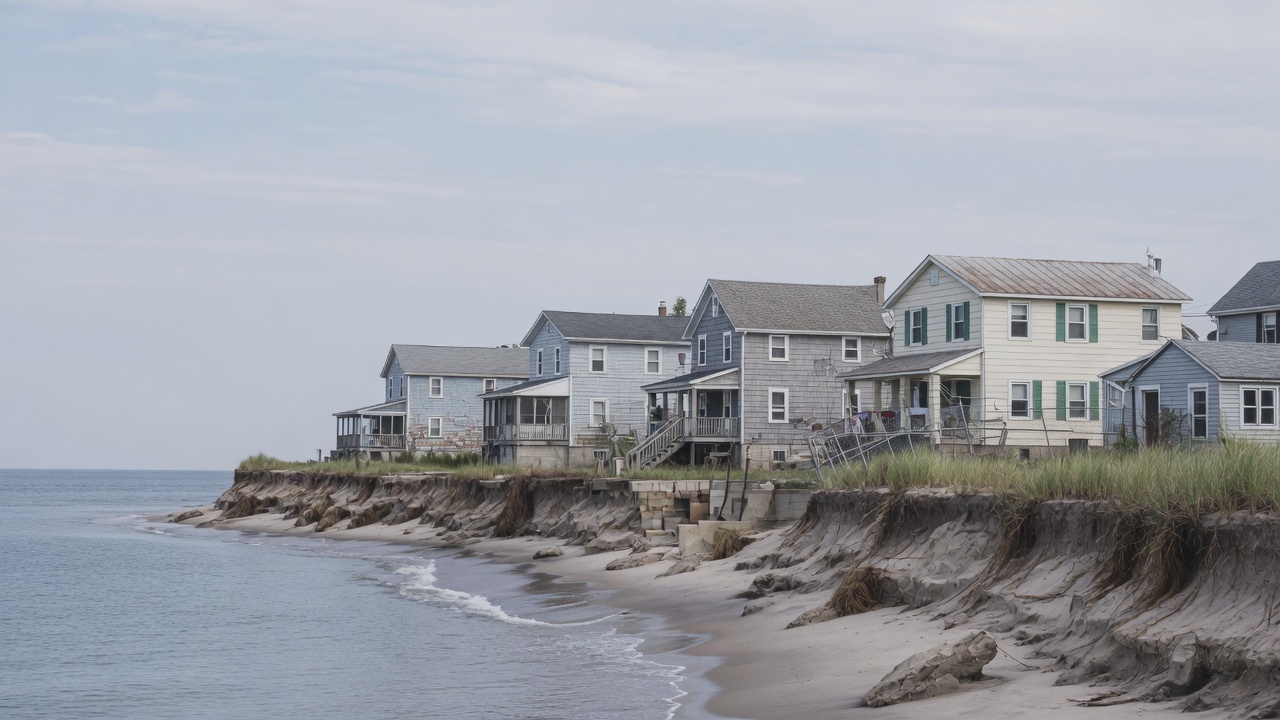
Withdraw the prediction, and the town changes shape. Governments argue about seawalls and buyouts. Meanwhile a quieter legislature is already in session: underwriters. When coverage is repriced or refused, a household cannot as easily mortgage, sell, or rebuild. Some leave. Some underinsure. Some wait for a public pool that was never designed to be a town. The coastline moves in the demographic sense before it moves in the geomorphic one.
This is not a metaphor. It is a present-tense force in several fire and flood geographies. It should not be flattened into a single country’s politics, and it should not be treated as a pure climate fingerprint. Construction costs, interest rates, reinsurance cycles, and legal systems share the page. The directional claim still stands: risk-bearing paper can relocate a population faster than a comprehensive plan.
What a residual market is for
Most households do not meet an insurer of last resort until the ordinary market has already said no.
In California, the FAIR Plan—Fair Access to Insurance Requirements—was built as a fire backstop: basic property coverage for people who cannot find it in the admitted market. It is not a full homeowners policy. Liability, theft, and many water losses typically sit outside it. Brokers are supposed to search the ordinary market first. Enrollment is therefore a reasonably honest tracer of where private capital has stepped back.
That tracer has moved. MoneyGeek’s analysis of California Department of Insurance data found 788,485 homeowners nonrenewals statewide in 2023, of which the department estimated roughly a fifth to a quarter were insurer-initiated. New policies written fell from about 1.01 million in 2020 to about 724,000 in 2023. FAIR Plan residential policies grew from 242,440 in September 2021 to 642,010 in September 2025. In the ten counties with the highest wildfire exposure, nonrenewal rates in 2023 were about 16 percent, nearly double the statewide rate. In those counties, on the order of one in three residential policies was FAIR Plan paper. Ninety percent of FAIR Plan policies sat in counties FEMA rates as relatively high or very high for wildfire.
The names in the letters are familiar. Allstate stopped writing new California homeowners business in 2022. State Farm, the state’s largest homeowners writer, stopped new applications in 2023 and later nonrenewed tens of thousands of existing policies in higher-risk areas—on the order of 30,000 homeowners and property policies in a March 2024 announcement, with larger cumulative counts reported as the year went on. Farmers capped new volume. A New York Times review in 2025 found that residential FAIR policies had nearly doubled since a state “sustainable insurance” deal was announced, and that major groups had filed to drop tens of thousands of policies, a non-trivial share of them in ZIP codes that would burn in the January 2025 Palisades and Eaton fires.
Florida’s residual market is Citizens Property Insurance Corporation, a state-created company that is supposed to be a last resort and has, at intervals, been the largest homeowners writer in the state. Citizens is not a FAIR Plan. It writes a fuller policy, is capped in how fast it may raise rates, and can, if a storm breaks it, assess other Florida policyholders. That assessment power is the political fact inside the insurance fact: a last-resort pool is a way of socializing a tail that private capital has already declined. When the pool is small, the socialization is a backstop. When the pool holds one in six houses, the socialization is the market. After a cluster of insolvencies, assignment-of-benefits litigation, and reinsurance shock, Citizens’ policy count rose from the low hundreds of thousands at the end of the 2010s to a peak of about 1.41 million in September 2023. That concentration is the thing a last-resort pool is designed not to become. Legislative reforms in 2022 and 2023, aimed at lawsuits and claims practices, were followed by an aggressive depopulation program: private carriers taking blocks of Citizens policies. By late 2024 the count was under a million; by 2025–2026, Citizens’ own reports and trade coverage put it in the mid-hundreds of thousands, then lower still, with market share falling from the mid-teens toward a few percent. The pendulum is the story as much as the peak. A residual market that inflates is a map of private retreat. A residual market that then empties is a map of private return—on terms, at prices, and in geographies the private market will accept.
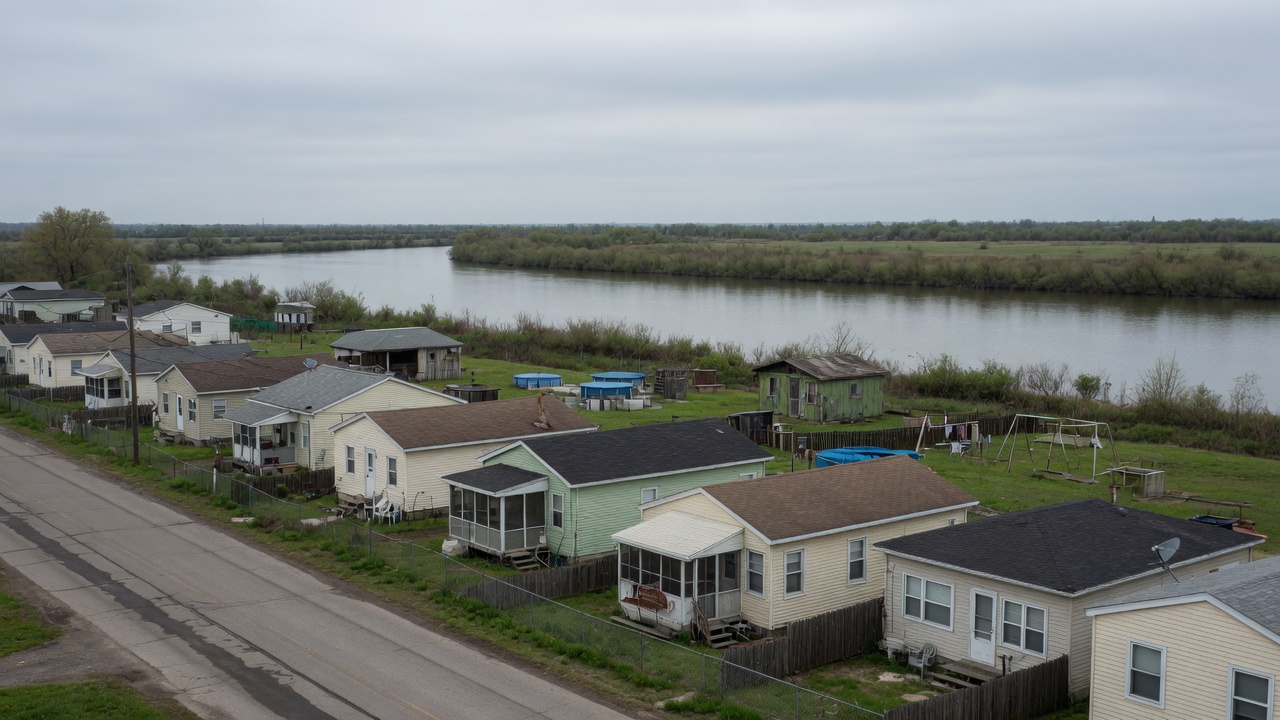
Australia does not have a FAIR Plan or a Citizens. It has a general-insurance market, a prudential regulator, and, in the worst flood towns, a growing set of households that cannot buy cover they can pay for. After the 2022 Northern Rivers floods, Lismore became the public name for a problem that is not only Lismore. The Actuaries Institute, using work by Finity, reported that more than half of households in Lismore and the Northern Rivers faced home-insurance premiums exceeding a month’s gross household income. Across the country, households in insurance affordability stress rose by about 30 percent in a year, to 1.6 million, in that 2024 analysis. The Climate Council’s Uninsurable Nation work has used a different vocabulary—“effectively uninsurable” as a premium-to-value threshold—and projected hundreds of thousands of properties into high-risk categories by 2030. Those projections are scenarios, not counts of declined applications. APRA’s Insurance Climate Vulnerability Assessment, run with IAG, Suncorp, Allianz, QBE, and Hollard, put a present “protection gap” on the order of 15 percent of houses facing unaffordable premiums, with a modeled rise toward about a quarter by 2050 under the climate scenarios used. The Sydney Morning Herald, using Finity data in 2026, reported that the Richmond–Tweed region’s average new-business quote had risen 81 percent since January 2021, to about $8,800 a year. Flood, in that analysis, dominated bushfire as a driver of the price.
Three countries, three legal machines, one pattern: where expected loss and the cost of holding tail risk exceed what a regulated price, or a household budget, will bear, the ordinary market thins. The thinning is the policy.
Mixed causes, on purpose
It is tempting to write this as climate policy that does not need a parliament. That sentence is half right, and the other half is the part that keeps the analysis honest.
Climate and catastrophe experience belong in the file. California’s 2017–2018 wildfire seasons erased years of homeowners underwriting profit. Florida’s hurricane seasons, including Ian in 2022 and the 2024 landfalls, are the peril the state’s entire capital structure is built around. Northern New South Wales flooded in a way that updated many households’ sense of a “one-in-a-hundred-year” event. Catastrophe models have been revised. Insurers say so in their withdrawal letters. They are not inventing the weather.
They are also not only pricing the weather.
Reconstruction costs jumped after 2020. Materials, labor, and delay all raise the amount an insurer must hold to rebuild the same house. Verisk and industry briefs documented reconstruction-cost inflation running well ahead of general CPI for a stretch; the Insurance Information Institute and others have treated replacement-cost inflation as a first-order driver of premiums. Benjamin Keys and Philip Mulder, in NBER work that is now the largest public study of U.S. homeowners pricing in this period, found that average nominal premiums rose from about $1,690 in 2017 to about $2,750 in 2024. Construction-cost increases explained about 35 percent of the rise after 2017. A tightening link between disaster risk and premium explained about 20 percent. The association between a one-standard-deviation increase in disaster risk and the premium rose from about $220 in 2017 to about $615 in 2024. Reinsurance prices roughly doubled between 2018 and 2023. Higher interest rates pulled capital toward other uses and made the cost of holding catastrophe risk more expensive even as they later improved insurers’ investment income. In Florida, litigation and assignment-of-benefits practices were, in the industry’s and the legislature’s account, a larger near-term driver than a new climate model. A Brookings analysis of hurricane models and premiums found that modeled expected hurricane losses for a representative Florida home rose on the order of 50 percent from 2006 to 2023, while hurricane premiums rose more than 200 percent. Climate risk explained part of the bill. The price of transferring tail risk to global capital markets explained another part.
California’s prior-approval system, and for years a restriction on using catastrophe models and reinsurance costs in the admitted rate, is part of that state’s particular machine. Insurers argued they could not charge what they needed. Consumer groups argued they were using wildfire as cover for a broader exit. Both can be true in different ZIP codes. The New York Times and the California Department of Insurance are not the same witness. A serious account keeps both.
Australia’s premium spike in flood towns is closer to a pure peril-repricing, with less of Florida’s litigation overlay and less of California’s wildfire-plus-regulation cocktail. It still includes reinsurance, reconstruction, and a household income that did not rise 81 percent.
The mixed-cause point is not a way of changing the subject. It is a way of not writing a single-factor story that will fail the first time rates fall after a quiet year, or rise after a lumber shock. A premium is a prediction with a bill attached. The prediction contains weather, building costs, the price of money, and the law of claims. Withdraw any one of those and the bill still moves.
Faster than a plan
Land-use plans, buyout programs, and managed-retreat studies move at the speed of hearings. Insurance moves at the speed of a renewal.
A mortgage typically requires a policy. A sale typically requires a buyer who can get one. A rebuild after a fire or a flood typically requires a cheque that arrives before the next season. When the admitted market nonrenews a hillside ZIP code, the FAIR Plan plus a difference-in-conditions wrap may still close the loan, at a price that changes who can stay. When even the wrap is scarce, or when a flood premium in Lismore exceeds a month’s pay, the household’s options narrow to underinsurance, cash buyers, or leaving. Keys and Mulder estimated that rising premiums weighed on home values by about $20,500 in the top quartile of catastrophe-exposed homes, and by about $43,900 in the top tenth. That is not a zoning vote. It is a capitalization of a bill.
Who gets left is the ethical remainder, and it is not a slogan. People who own outright, who can pay cash for a repair, or who can absorb a FAIR-plus-wrap invoice stay longer than people who need a conventional mortgage. Renters do not receive the nonrenewal letter; they receive a rent increase or a sale. Lower-income ZIP codes and higher-risk ZIP codes are not the same set, but they overlap in floodplains, in inner-suburban fire interfaces, and in towns that were cheap because they flood. A public pool that is allowed to grow without a plan for depopulation concentrates tail risk on remaining policyholders and, in Florida’s design, on a statewide assessment if the pool breaks. A public pool that is kept small by price or by eligibility leaves people in the gap.
Australia’s protection-gap language is useful here. The uninsured are not only the uninsurable. They are also the people who were offered a price and declined it. Both groups live in the same street after the water. The difference is that one group still had a paper relationship with a balance sheet. The other had a prediction with no bill, which is to say: no transfer of the tail to anyone who can pay it.
Mortgage markets transmit the signal. Fannie Mae, Freddie Mac, and their counterparts do not originate a conventional loan on an uninsured house. A cash buyer can ignore the letter. A household that needs 90 percent financing cannot. Real-estate agents in fire-exposed California ZIP codes have reported deals that failed when the buyer could not bind a policy in time. That is a land-use outcome produced by an underwriting department. It will not appear in a general plan as a “retreat overlay.” It will appear as a listing that sits, a price that drops, and a household that stays because it cannot sell to anyone who needs a bank.
Who can stay, then, is partly a question of tenure. Owners without a mortgage, owners who can pay a FAIR Plan invoice and a wrap, and owners whose houses sit just outside the nonrenewal polygon remain. Owners who bought recently with a thin down payment, whose insurance escrow just doubled, or whose employer is in another metro, leave first if they can. Those who cannot leave become the residual: underinsured, uninsured, or parked in a public pool. That residual is not a random sample of the old town. It is the part of the town the prediction declined to carry.
Markets are already relocating people. They relocate capital first—new policies not written, existing ones not renewed—and households second. Comprehensive climate adaptation plans, where they exist, are often still arguing about a seawall that would take a decade. The renewal cycle is twelve months. That mismatch is the hidden government of risk.
What honesty can still say
Honesty is not “the market will gently manage retreat.” It has not been gentle, and it is not a manager with a mandate for fairness. Honesty is also not “prices are a hoax.” Expected losses have risen in particular perils, reconstruction is more expensive, and a firm that cannot charge for tail risk will not hold it.
A last-resort plan is a tool. It can keep a town insurable in the thin sense while a fire code, a buyout, or a floodplain reconnection does slower work. It can also become a warehouse of leftover risk, underpriced, waiting for a season that will assess everyone else. Citizens’ inflation and deflation in three years is a demonstration of both uses. The FAIR Plan’s growth is a demonstration of the first use under strain. Lismore’s premiums are a demonstration of what happens when there is no such warehouse, or none that a household can enter.
Australia has experimented with a narrower backstop: a cyclone reinsurance pool for the north, designed to cheapen cover where a named peril had made the private price unworkable. A pool of that kind can move a premium. It does not, by itself, move a house, a levee, or a planning scheme. The APRA exercise is explicit that where new houses are built—high-risk or low-risk land—changes the future protection gap as much as the climate scenario does. Insurance retreat is land-use policy whether a planning department signs it or not. The people who cannot follow the capital, or who follow it into a thinner town with a worse job, are the part of the story that a loss ratio does not print.
Follow the connection far enough and insurance is not a boring sidecar to climate, construction, or the cost of money. It is one of the ways those forces become a street. The ethical problem is the same as the floodplain sold twice: people already there, capital already committed, a fire or a river that does not care. A premium is a prediction with a bill attached. The question worth keeping public is who the prediction is allowed to leave behind, and whether anyone is writing a plan that moves at a speed the bill already has.
Sources
- California Department of Insurance. Data on homeowners nonrenewals, new policies, and the California FAIR Plan; Commissioner Ricardo Lara’s Sustainable Insurance Strategy materials.
- MoneyGeek. “Private Home Insurers Are Exiting 46 of California’s 58 Counties Amid Rising Wildfire Risk.” Analysis of CDI and FAIR Plan data, including FAIR Plan growth from 242,440 residential policies (September 2021) to 642,010 (September 2025).
- New York Times. “California Promised Insurance Relief, But Delivered Loopholes.” 1 November 2025. (FAIR Plan residential policies; nonrenewal filings; ZIP codes later burned in the January 2025 Palisades and Eaton fires.)
- Insurance Journal and California Department of Insurance filings. State Farm General’s 2023 pause on new California homeowners business and March 2024 nonrenewal announcements; Allstate’s 2022 pause.
- Citizens Property Insurance Corporation. Policy-in-force reports and depopulation tallies, 2023–2026; peak near 1.41 million policies in September 2023.
- S&P Global Market Intelligence; Florida Division of Bond Finance. “Florida Property Insurance” updates on Citizens’ count, takeouts, and 2022–2023 legislative reforms.
- Reuters. “Florida Homeowners Fear Soaring Insurance Cost after Hurricanes.” 17 October 2024; and related 2024 coverage of Helene, Milton, and Florida premiums.
- Actuaries Institute / Finity. Home insurance affordability analysis, 2024 (1.6 million Australian households in affordability stress; Northern Rivers / Lismore).
- Australian Prudential Regulation Authority. Mind the Gap: An Insurance Climate Vulnerability Assessment. 2025–2026. (Protection gap on the order of 15 percent of houses, modeled toward about 25 percent by 2050; participants IAG, Suncorp, Allianz, QBE, Hollard.)
- Climate Council of Australia. Uninsurable Nation (2022) and subsequent property-risk commentary.
- Sydney Morning Herald. “Caught in a Trap: The Most Expensive Regions for Insurance on Australia’s East Coast.” Finity analysis, 2026 (Richmond–Tweed premiums).
- Keys, Benjamin J., and Philip Mulder. “Property Insurance and Disaster Risk: New Evidence from Mortgage Escrow Data.” NBER Working Paper 32579, 2024, revised 2025.
- New York Times. “Rising Home Insurance Premiums Are Eating Into Home Values in Disaster-Prone Areas.” 19 November 2025. (Keys–Mulder capitalization estimates.)
- Brookings Institution. “Pricing Climate Risk: Hurricane Models and Home Insurance over the Last Two Decades.”
- Verisk / Insurance Information Institute. Reconstruction-cost inflation and homeowners premium drivers, 2021–2024.
- Senate Banking testimony and NAIC summaries of California homeowners underwriting results, 2017–2018 wildfires, and prior-approval delays.
A premium is a prediction with a bill attached. Withdraw the prediction, and the town changes shape.
Follow the connection
- Hazard
- Price
- Nonrenewal
- Credit and sale
- Who can stay
What we know
- Insurers price and sometimes withdraw coverage where expected losses exceed what they can charge.
- Coastal and wildfire-exposed markets in several countries have seen rapid premium growth, nonrenewals, and last-resort public pools.
- Mortgage, building, and remaining-in-place all depend on that paper.
- This reallocates people and capital even when elected climate policy is stalled.
What remains uncertain
- How much of a given spike is climate, rebuilding cost, interest rates, or a market cycle.
- Whether public backstops reduce harm or subsidize staying in the water’s way.
- How quickly “uninsurable” becomes “unlivable” for households that cannot cash out.
What can we do?
You don't have to care about this because everyone else does. You can care because the evidence gives you a reason to.
- Read an insurance letter as a land-use document.
- Support honest maps and transition help for people the market is already moving.
- Refuse both slogans: that markets will gently manage retreat, and that prices are a hoax.
Demonstration authors are fictional. The phenomena discussed are real subjects of public scientific literature and reporting. Sources named in the article are documented; this is not a comprehensive literature review.