Science
A Prescription in the Watershed
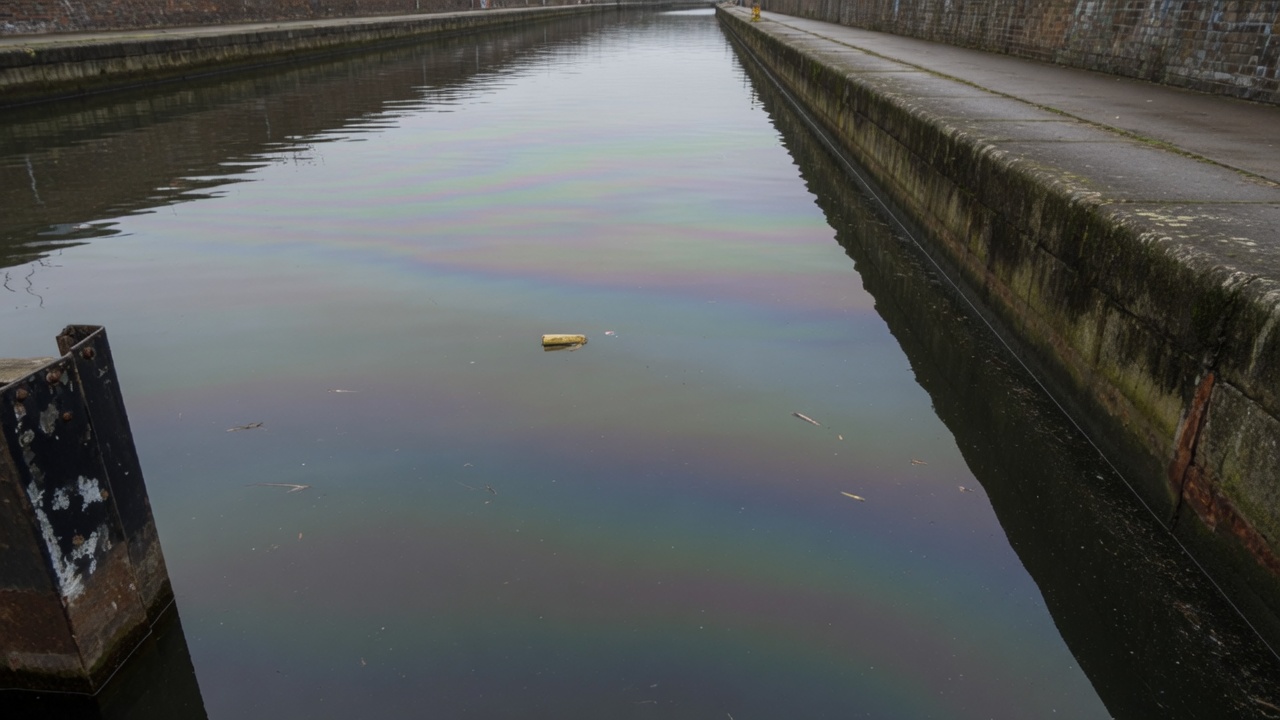
Medicine does not end in the body. Some of it takes the drain to the river
A river can test positive for a medicine no fish was prescribed.
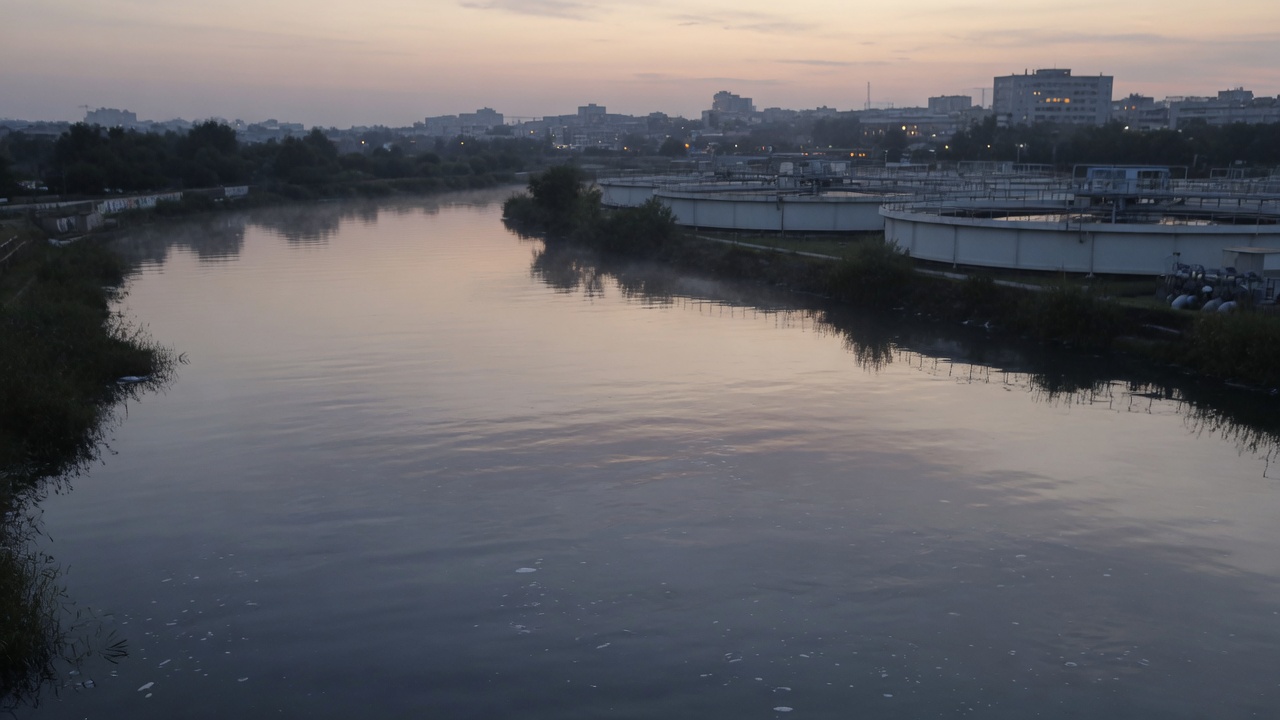
That sentence is no longer a curiosity. Environmental chemists have spent a generation finding painkillers, antibiotics, antidepressants, hormones, and other drugs downstream of cities. The pathway is almost dull: swallow, excrete, sewer, plant, outfall. A share of every dose leaves the body unmetabolized or as an active transformation product. Another share is poured, unused, into a toilet. The treatment plant that receives both was built, in the main, to take down solids, pathogens, and the oxygen-demanding waste that once turned rivers into open sewers. A molecule designed to survive a stomach, and to be biologically active at a low dose, is a different assignment.
Detection of many pharmaceuticals in surface water is established. Endocrine disruption in some wild fish—estrogenic compounds, intersex, egg proteins in males—is probable in particular rivers, and was demonstrated experimentally in a whole lake. What remains unknown, and should stay labelled unknown, is how often those effects scale to population collapse in the messy mixtures of real rivers, and whether drinking-water traces of most compounds are a human-health urgency. Presence is not a body count. Flying River will keep those sentences separate.
The plant’s original job
A conventional municipal wastewater plant is a biological reactor pointed at a nineteenth-century problem. Settle the solids. Feed the dissolved organic matter to microbes until the biochemical oxygen demand falls. Kill the bacteria that cause cholera and typhoid. Discharge. Nutrient removal and more advanced processes came later, and not everywhere.
Pharmaceuticals are not a single class in that reactor. Some compounds sorb to sludge. Some biodegrade. Some pass. Removal efficiencies of tens of percent to more than ninety percent appear in the literature depending on the molecule, the solids retention time, the temperature, and whether the plant has a tertiary step. The outfall is not a faucet of pure drug. It is a diluted, partially treated mixture whose composition tracks the pharmacy, the hospital, the nursing home, and the industry upstream.
Hospitals are concentrated sources. Households, in aggregate, are often the larger load, because there are more of them and because chronic medications are taken at home. Livestock and aquaculture are a different plumbing: veterinary medicines in manure, in runoff, in lagoon leakage, in fish-farm effluent, often never passing a municipal plant at all. Alistair Boxall and colleagues have spent years on that second pathway—antibiotics, anthelmintics, sheep-dip chemicals—entering soil and water without the courtesy of an outfall pipe. A river’s prescription history is not only a city’s.
Flushing unused medicine is the part of the load that is easiest to lecture about and not the part that dominates most mass-balance studies. The U.S. Food and Drug Administration has noted that most drug residues in water come from excretion after use, not from disposal. That does not make a take-back program pointless. It puts the program in its place: a reduction of avoidable load and of accidental poisoning, not a cure for the outfall.
Detection, at last ordinary
In 1999 and 2000, the U.S. Geological Survey conducted the first nationwide reconnaissance of pharmaceuticals, hormones, and other organic wastewater contaminants in U.S. streams. Dana Kolpin, Edward Furlong, Michael Meyer, and colleagues measured ninety-five compounds in 139 streams across thirty states, with sites biased toward urban and livestock influence. One or more of the compounds were found in eighty percent of the streams. Eighty-two of the ninety-five were found at least once. A median sample contained seven; some contained several dozen. Concentrations were generally low, often less than a microgram per litre, and rarely exceeded existing drinking-water guidelines—guidelines that, for most of these molecules, did not exist.
The most frequently detected compounds were not all human drugs. Coprostanol, cholesterol, DEET, caffeine, triclosan, a fire-retardant phosphate, and 4-nonylphenol headed the list. The human pharmacy was in the mix: antibiotics, codeine, hormones. The finding that mattered editorially was not a single villain. It was that a treated-sewage marker suite is now a normal constituent of moving water in a developed landscape, and that the mixture is the exposure.
Surveys since have repeated the pattern on other continents, in groundwater under leaky sewers, and, at still lower concentrations, in some finished drinking waters. Analytical chemistry improved. The list lengthened. None of that, by itself, is a toxicology.
Fish that were not the intended patient
The toxicology that is on the strongest ground is not a human cancer scare. It is the feminization of fish.
In the 1990s, John Sumpter, Susan Jobling, Charles Tyler, and colleagues in the United Kingdom established that treated sewage effluent is estrogenic, and that wild roach (Rutilus rutilus) living downstream of wastewater works show a high incidence of intersex: oocytes in otherwise male gonads, malformed ducts, vitellogenin—an egg-yolk protein—in the blood of males. Jobling’s 1998 paper in Environmental Science & Technology called it the first documented example of widespread sexual disruption in wild populations of a vertebrate, associated with sewage discharges known to contain estrogenic chemicals. Natural estrogens (estrone, 17β-estradiol), the synthetic estrogen in many oral contraceptives (17α-ethinylestradiol, EE2), and weaker mimics such as nonylphenol were in the explanatory mix. Later modelling by Jobling and others suggested antiandrogens in effluent as an additional contributor. Intersex roach have been found to have reduced fertility relative to unaffected males. That is not a laboratory curiosity. It is still not, by itself, a demonstration that English roach populations are collapsing.
A 2023 resurvey of English sites, again in Environmental Science & Technology, found that endocrine disruption is reduced but still widespread. Intersex was still present at sixty percent of revisited sites; male vitellogenin remained elevated at most of them. No males with feminized ducts were found, unlike in the historical samples. At some larger works, treatment upgrades likely helped. At several smaller works, frequencies had not changed much since the late 1990s. The story is not “problem solved.” It is not “the rivers are dying of the pill.” It is a partial, uneven abatement of a real effect.
In the United States, Jo Ellen Hinck, Vicki Blazer, and USGS colleagues examined fish from 111 sites in 1995–2004. Intersex—chiefly testicular oocytes in males—was found in four of sixteen species, at thirty-four of the sites. It was most prevalent in black basses: about eighteen percent of male largemouth bass and thirty-three percent of male smallmouth bass in the study. In some southeastern basins, intersex largemouth bass were present at every site sampled. Causes were not assigned compound by compound. Wastewater, agricultural runoff, and sites without an obvious point source all appeared. Blazer’s later work in the Potomac basin associated intersex severity in smallmouth bass with agricultural land use and animal density as well as with wastewater. Livestock, here, is not a footnote.
Established: estrogenic effluent can feminize fish, and intersex has been found in wild populations in the UK, the US, and elsewhere. Probable: for some species in some effluent-dominated reaches, reproduction of individuals is impaired. Unknown: how often that impairment is the factor that decides whether a population persists, against habitat, fishing, temperature, and everything else in the river.
A lake that was dosed on purpose
The missing step between an intersex male and a vanished population was taken, unusually, in a whole ecosystem.
Karen Kidd and colleagues conducted a seven-year experiment at the Experimental Lakes Area in northwestern Ontario. After two years of baseline, they added 17α-ethinylestradiol to a lake in summer for three years, holding concentrations at about 5–6 nanograms per litre—within the range reported downstream of some sewage plants. Fathead minnows (Pimephales promelas) produced vitellogenin at extreme levels in males, developed intersex, showed delayed gonadal development, and, within two years, stopped reproducing. The population collapsed to near extinction. Even after dosing stopped, recovery was slow. The paper, in the Proceedings of the National Academy of Sciences in 2007, is as close as this field gets to a completed causal chain: a contraceptive estrogen, at an environmentally relevant concentration, can crash a short-lived wild fish population.
It is also a single compound, at the high end of environmental EE2, in a small lake with a small fish. Real rivers contain mixtures at varying dilutions, with species that live longer and spawn differently. Susan Jobling noted at the time that a slightly lower concentration would have been even more clearly “typical.” The experiment answers “can it?” It does not answer “how often does it?” Flying River will not pretend those are the same question. We will also not pretend that “can it?” is a curiosity.
Drinking water, mixtures, and the temperature of the claim
Traces of pharmaceuticals have been measured in some finished drinking waters, typically at nanograms per litre—orders of magnitude below therapeutic doses. The World Health Organization, in a 2012 technical report, reviewed the then-available occurrence and toxicology and concluded that there was a substantial margin of safety between those concentrations and minimum therapeutic doses, suggesting a very low risk to human health from drinking-water exposure as then understood. Formal health-based guideline values in the WHO Guidelines for drinking-water quality were not considered necessary. The report warned, explicitly, against diverting water suppliers from microbial pathogens and from chemicals such as arsenic and excess fluoride. It recommended preventing entry where practical: rational use, not flushing unused drugs, and take-back programmes.
That assessment is a decade and more old. Analytical lists have grown. The conclusion that most individual compounds in tap water are not a demonstrated human-health crisis has not been replaced, in the major public-health agencies, by a general alarm. It also does not cover occupational mixtures, or highly effluent-dominated source waters, or compounds that have not been looked for. Unknown is the correct word for the mixture as a mixture. Chemicals that are individually below a threshold can still interact. The science of those interactions at environmental concentrations is thinner than the chromatography.
Scare-mongering fills the gap with a headline about tap water as a pharmacy. The honest gap is smaller and stranger: we have built a chemical sense that can find almost anything, and we have not built an ecology that can tell us, for most of those anythings, whether a population of fish or a population of people is different because of it.
Livestock, hospitals, households
The load is not one villain.
Households contribute the chronic medications of millions of people, excreted as designed. Hospitals contribute a more concentrated, sometimes more potent suite—including cytotoxics and contrast agents—on top of ordinary drugs. Manufacturers have been point sources in particular catchments when production waste was poorly controlled. Livestock contribute veterinary antibiotics and antiparasitics in manure and runoff; aquaculture contributes directly to water. Boxall’s reviews are clear that the route depends on the animal and the practice: a fish farm is not a dairy, and a dairy is not a sewage plant.
Antibiotic residues raise a separate, legitimate worry: selection for resistance in environmental bacteria. That is a public-health hypothesis with growing evidence in particular settings, not a completed demonstration that every river outfall is a clinic. It belongs in the same careful voice as the fish: follow the connection, do not inflate it.
Take-back, and what it cannot do
Where a take-back programme exists, unused medicine should go there rather than to the toilet. The U.S. Drug Enforcement Administration’s National Prescription Drug Take Back Day has, over more than a decade of events, collected millions of pounds of unwanted medications, with year-round drop boxes at many pharmacies and police stations. The FDA’s first advice is the same: a take-back or mail-back when you can get one. A short flush list remains for a few high-risk opioids and related drugs when a take-back is not available, because a single accidental dose can kill a child. For most other medicines, household trash, mixed and bagged, is the fallback.
These programmes were built to prevent abuse and accidental poisoning. They are also a minor hydrological hygiene. They will not redesign the treatment plant. Advanced oxidation, activated carbon, and longer biological treatment can take out more pharmaceuticals; they cost money and energy, and they are not a substitute for not putting a molecule into the sewer that did not need to be there. Prescribers, formularies, and veterinary practice are upstream of the plant in a way a drop box is not.
You don’t have to care about this because a headline found antidepressants in a river. You can care because a molecule designed to change a body will, if it leaves a body, meet other bodies the plant was never asked to protect. Return the unused dose. Support plants and monitoring that look for more than bacteria. Keep detection and harm in separate sentences. The river will still test positive. The question is whether we can read the test without inventing a plague or declaring a clean bill of health we have not earned.
Sources
- Kolpin, Dana W., Edward T. Furlong, Michael T. Meyer, et al. “Pharmaceuticals, Hormones, and Other Organic Wastewater Contaminants in U.S. Streams, 1999–2000: A National Reconnaissance.” Environmental Science & Technology 36, no. 6 (2002): 1202–1211.
- Barnes, Kimberlee K., et al. Water-Quality Data for Pharmaceuticals, Hormones, and Other Organic Wastewater Contaminants in U.S. Streams, 1999–2000. U.S. Geological Survey Open-File Report 02-94, 2002.
- Buxton, Herbert T., and Dana W. Kolpin. Pharmaceuticals, Hormones, and Other Organic Wastewater Contaminants in U.S. Streams. U.S. Geological Survey Fact Sheet 027-02, 2002.
- Jobling, Susan, Monique Nolan, Charles R. Tyler, Geoff Brighty, and John P. Sumpter. “Widespread Sexual Disruption in Wild Fish.” Environmental Science & Technology 32, no. 17 (1998): 2498–2506.
- Jobling, Susan, et al. “Altered Sexual Maturation and Gamete Production in Wild Roach (Rutilus rutilus) Living in Rivers That Receive Treated Sewage Effluents.” Biology of Reproduction 66, no. 2 (2002): 272–281.
- Jobling, Susan, et al. “Statistical Modeling Suggests That Antiandrogens in Effluents from Wastewater Treatment Works Contribute to Widespread Sexual Disruption in Fish Living in English Rivers.” Environmental Health Perspectives 117, no. 5 (2009): 797–802.
- Baynes, Alice, Anke Lange, Nicola Beresford, Euan Bryden, Katie Whitlock, Charles R. Tyler, and Susan Jobling. “Endocrine Disruption Is Reduced but Still Widespread in Wild Roach (Rutilus rutilus) Living in English Rivers.” Environmental Science & Technology 57, no. 34 (2023): 12632–12641.
- Jobling, Susan, et al. “Wild Intersex Roach (Rutilus rutilus) Have Reduced Fertility.” Biology of Reproduction 67, no. 2 (2002): 515–524.
- Environment Agency (England). Oestrogenic Effects in Wild Fish: Comparing Contemporary and Historical Impacts. Report, 2021.
- Hinck, Jo Ellen, Vicki S. Blazer, Christopher J. Schmitt, Diana M. Papoulias, and Donald E. Tillitt. “Widespread Occurrence of Intersex in Black Basses (Micropterus spp.) from U.S. Rivers, 1995–2004.” Aquatic Toxicology 95, no. 1 (2009): 60–70.
- Blazer, Vicki S., Luke R. Iwanowicz, D. D. Iwanowicz, et al. “Intersex (Testicular Oocytes) in Smallmouth Bass from the Potomac River and Selected Nearby Drainages.” Journal of Aquatic Animal Health 19, no. 4 (2007): 242–253.
- Blazer, Vicki S., et al. “Reproductive Endocrine Disruption in Smallmouth Bass (Micropterus dolomieu) in the Potomac River Basin: Spatial and Temporal Comparisons of Biological Effects.” Environmental Monitoring and Assessment 184 (2012): 4309–4334.
- Kidd, Karen A., Paul J. Blanchfield, Kenneth H. Mills, et al. “Collapse of a Fish Population after Exposure to a Synthetic Estrogen.” Proceedings of the National Academy of Sciences 104, no. 21 (2007): 8897–8901.
- World Health Organization. Pharmaceuticals in Drinking-Water. Geneva: WHO, 2012.
- Boxall, Alistair B. A., et al. “Veterinary Medicines in the Environment.” Reviews of Environmental Contamination and Toxicology 180 (2004): 1–91.
- Boxall, Alistair B. A. “The Environmental Side Effects of Medication.” EMBO Reports 5, no. 12 (2004): 1110–1116.
- U.S. Food and Drug Administration. “Drug Disposal: FDA’s Flush List for Certain Medicines” and guidance on unused-medicine disposal; notes that excretion after use is the main pathway of pharmaceuticals into water.
- U.S. Drug Enforcement Administration. National Prescription Drug Take Back Day: public totals and year-round authorized collector network.
A river can test positive for a medicine no fish was prescribed.
Follow the connection
- Dose
- Excretion
- Sewer
- Treatment plant
- River
- Wildlife
What we know
- Many pharmaceuticals are excreted unmetabolized or as active breakdown products.
- Conventional wastewater treatment removes some compounds and lets others pass.
- Surveys have found antibiotics, hormones, painkillers, and other drugs in rivers and groundwater in many countries.
- Laboratory and some field studies show effects on aquatic organisms (for example, endocrine disruption) at environmentally relevant concentrations for some compounds.
What remains uncertain
- Which mixtures, at which places, change wild populations rather than individual fish in a tank.
- How much of the load comes from households versus hospitals versus livestock.
- What “safe” means for a compound designed to be biologically active at low dose.
What can we do?
You don't have to care about this because everyone else does. You can care because the evidence gives you a reason to.
- Return unused medicine to take-back programs rather than the toilet, where such programs exist.
- Support treatment upgrades and monitoring that look for more than bacteria.
- Keep detection and harm in separate sentences: presence is not automatically a body count.
Demonstration authors are fictional. The phenomena discussed are real subjects of public scientific literature and reporting. Sources named in the article are documented; this is not a comprehensive literature review.