Systems
The Quiet Cost of Noise
What happens when an environment is never truly quiet
Silence is not a luxury good. It is a condition in which nervous systems evolved.
A human auditory system, a bird’s syrinx and ear, an owl’s facial disc, a sleeping cortex that still samples the night for threat—these are instruments tuned in a world whose background was wind, water, insects, and other animals. They were not tuned in a world whose background is a highway. The mismatch is easy to treat as a matter of taste, a complaint about the neighbors, a preference for the countryside. It is not. It is a public-health literature and an ecological literature about the same physical medium: pressure waves, in air, at the frequencies that matter to a heart, a night’s sleep, a territorial song, and a hunt.
The two literatures have different journals, different funders, and different political enemies. They describe one problem.
What the health evidence actually says
In 2018 the World Health Organization’s Regional Office for Europe published Environmental Noise Guidelines for the European Region. The document is not a vibe. It is a set of recommendations, graded by the strength of the underlying evidence, for road, rail, aircraft, wind-turbine, and leisure noise, using the indicators that European law already reports: Lden, a twenty-four-hour average with evening and night penalties, and Lnight.
For road traffic, the Guideline Development Group strongly recommends reducing average exposure below 53 decibels Lden, because above that level road noise is associated with adverse health effects. It strongly recommends reducing night-time road noise below 45 decibels Lnight, because above that level night noise is associated with adverse effects on sleep. It strongly recommends that policymakers implement measures to reduce exposure for people already above those values. “Strong,” in WHO’s usage, means that the group was confident the desirable effects of adherence outweigh the undesirable ones, not that every city is below the line.
The cardiovascular finding that does the most work in those numbers comes from a systematic review by Elise van Kempen, Maribel Casas, Göran Pershagen, and Maria Foraster, published in 2018 as input to the guidelines. Combining seven longitudinal studies, they reported a relative risk of 1.08 (95 percent confidence interval 1.01–1.15) for the incidence of ischaemic heart disease per 10-decibel increase in road-traffic Lden. They rated the quality of that evidence as high. For other pairings of source and outcome—stroke, diabetes, obesity, hypertension in the mostly cross-sectional literature—the quality ran from moderate down to very low. That gradient is part of the finding. A magazine that treats every noise-and-health headline as equally solid is not reading the GRADE table.
A relative risk of 1.08 per 10 decibels is not a rare disease exploding. It is an eight-percent higher incidence of a common disease, applied to tens of millions of people who live near roads. Small relative risks with large exposed populations are how environmental hazards become visible in disability-adjusted life years rather than in a single famous outbreak.
WHO had already tried to count those years. The 2011 report Burden of Disease from Environmental Noise, prepared with the European Commission’s Joint Research Centre, estimated annual DALYs lost in the European Union and other western European countries at 61,000 years for ischaemic heart disease, 45,000 for cognitive impairment in children, 903,000 for sleep disturbance, 22,000 for tinnitus, and 587,000 for annoyance. The authors, applying conservative assumptions to avoid double counting, said that at least one million healthy life years are lost every year from traffic-related noise in the western part of Europe. The unadjusted sum of those line items is about 1.6 million. The 2018 guidelines, in their foreword, used that larger figure in public language: in western Europe alone, at least 1.6 million healthy years of life are lost as a result of road traffic noise. Sleep disturbance and annoyance, mostly from roads, dominate the burden; heart disease dominates the deaths.
Later European Environment Agency assessments, using Environmental Noise Directive mapping, have produced different headline counts—on the order of a million healthy years in some EEA summaries, with tens of thousands of new heart-disease cases and premature deaths attributed to long-term transport noise. The methods and the geography are not identical to the 2011 WHO calculation. The direction is. Road traffic is the most widespread source. The health burden is not a curiosity of a few streets beside an airport.
Aircraft and railway noise have their own recommended levels in the 2018 guidelines—lower Lden for aircraft (a strong recommendation to reduce below 45 decibels Lden and 40 decibels Lnight), a different pair for rail—because the evidence, the time pattern, and the annoyance response differ by source. Wind-turbine noise, in the same document, was treated with more caution: a conditional recommendation, weaker evidence. That, too, is part of reading the guidelines rather than borrowing their prestige for a fight they were not written to settle.
The air next to the noise
People who live close to roads breathe exhaust and hear tires. If a study reports that “noise” predicts heart attacks, a fair reader asks whether the association is a disguised air-pollution effect, or a disguised effect of poverty, or both.
Van Kempen’s review noted the problem. Road noise and traffic-related air pollution share a source. Cardiovascular disease has a large air-pollution literature. If a model does not include particles or nitrogen dioxide, it may credit to the ear what belongs to the lung. If it includes both, and the two exposures are highly correlated, the estimates can become unstable.
The subsequent literature has not erased noise. It has, in most of the better-designed cohorts, found that associations between road noise and ischaemic heart disease or related outcomes survive adjustment for air pollution, and that air-pollution associations survive adjustment for noise. A 2023 systematic review on confounding (Eminson and colleagues, among others working this seam) concluded that most, though not all, studies suggested the noise–cardiovascular associations were independent of air pollution, with no clear difference across the pollutants most often used as controls, and with interaction still under-studied. Thomas Münzel and colleagues, writing for a cardiology audience, have made the same point: mutual adjustment is essential; recent studies that perform it generally keep a noise signal.
“Generally” is doing honest work. Some pooled analyses find attenuation after adjustment. Socioeconomic position, which clusters with both the noisy façade and the dirty air, is another confounder that studies handle with uneven care. Flying River will not pretend that the 1.08 relative risk is a chemically isolated effect of sound, purified of every co-exposure. We will also not pretend that because two hazards travel together, only one of them is real. A person on a polluted, noisy road is not a factorial experiment. They are a reason to reduce both.
The mechanisms proposed for noise do not require particles. Night-time noise fragments sleep, raises stress-axis activity, and, even when a person does not fully wake, can alter blood pressure and the chemical milieu in which vessels age. Those pathways are physiologically coherent. They are not, for every endpoint, as tightly measured as the particulate-matter literature. High-quality evidence for ischaemic heart disease incidence from road noise is the exception that the guidelines were willing to call high. Weaker evidence for other outcomes is not a license to invent them, and it is not a license to ignore sleep.
The other literature, the same air
A robin does not read WHO. It still has to be heard.
Richard Fuller, Philip Warren, and Kevin Gaston, working in Sheffield, showed in 2007 that urban European robins sang at night in places that were noisy by day. Night-time light, the usual suspect for birds that sing in the dark, was a much weaker predictor than daytime noise. Mean daytime levels were on the order of 10 decibels higher—an order of magnitude in intensity—at sites where robins sang nocturnally than at sites where they sang by day and not by night. The birds were not performing for insomniacs. They were moving a territorial signal into the hours when the acoustic channel was open.
That is one adaptation. There are others, and they are not costless. Hans Slabbekoorn and Margriet Peet reported in 2003 that great tits in noisy urban territories sang at a higher minimum frequency, a shift that can help a song escape the low-frequency rumble of traffic and can also change what a mate or a rival hears in the note. Other species have been shown to sing more loudly, to sing at different times, or to abandon noisy habitat. Clinton Francis and Jesse Barber, in a 2013 review, and later Shannon and colleagues in a 2016 synthesis, treated these changes as a general ecology of noise: masking, distraction, aversion, and the chronic stress that follows when an animal cannot leave.
Masking is not only a problem for courtship. It is a problem for not being eaten, and for eating.
Aaron Grade and Kathryn Sieving played tufted titmouse alarm calls to northern cardinals in Florida, near highways and away from them. Titmice and chickadees broadcast predator information that other species eavesdrop on. In quiet sites, cardinals responded: they froze, stopped singing, scanned. In noisy sites, none of the cardinals in the sample responded. Highway noise, at the levels they measured, was enough to break a warning system that does not belong to one species. The authors could not fully separate masking from distraction. They did not need to, for the ecological point. A signal that does not produce a response is, in the moment of a hawk, a failed signal.
Owls hunt by sound. Their faces are dishes. Their ears, in some species, are asymmetrical so that a rustle can be placed in the dark. J. Tate Mason, Christopher McClure, and Jesse Barber put northern saw-whet owls in a flight tent and played the broadband noise of a natural-gas compressor at levels corresponding to distances of 50 to 800 metres from a station (about 46 to 73 dBA). For each one-decibel increase in noise, the odds of hunting success fell by 8 percent. Odds of detecting prey and of striking also fell. At the higher levels, owls failed to notice mice that, in quiet, they took. Masayuki Senzaki and colleagues, working with wild owls and traffic-noise playback, found that foraging efficiency declined as traffic noise rose, with estimated effects reaching more than 120 metres from a road. A 2025 experiment on tawny owls, by Passarotto and colleagues, found that traffic noise and artificial light each reduced the birds’ ability to locate acoustic prey cues; visual cues were more robust until the two pollutants were combined.
These are not parables. They are dose–response measurements in predators whose niche is hearing. A landscape that looks intact from a satellite—trees, fields, a road along the edge—can be a hearing landscape that has already been cut.
The public-health literature and the ecological literature rarely share a bibliography. They should. The same tire-pavement rumble that raises Lnight at a bedroom façade is the rumble that masks a titmouse and a mouse. The species differ. The medium does not. An environmental policy that treats human sleep as a residential amenity and owl hunting as a wildlife sidebar is slicing a pressure wave down the middle and pretending the two halves are different sciences.
Established, probable, unknown
Established. Sound in air is a well-described physical quantity. Chronic exposure to road-traffic noise above the WHO guideline values is associated with sleep disturbance and, with high-quality epidemiological evidence, with a higher incidence of ischaemic heart disease on the order of 8 percent per 10 decibels Lden. WHO’s western-European burden estimates put the annual loss from traffic noise in the range of at least one million healthy life years, and in the guidelines’ own phrasing at least 1.6 million. Birds alter song timing, amplitude, and frequency in noise; some diurnal species sing at night where days are loud. Experimental work shows that traffic and industrial noise can mask alarm calls and can impair the hunting success of owls that locate prey by ear.
Probable. That a portion of the cardiovascular association is causal, acting through sleep and stress pathways that do not require air pollution as a mediator, even though the two exposures travel together. That reduced communication and reduced foraging in noisy habitat contribute to the well-documented pattern of lower bird diversity near roads, alongside collision, habitat loss, and chemical pollution. That night-time noise in cities is a population-level sleep problem, not a scatter of sensitive individuals.
Unknown. The exact split, on a given street, between noise, particles, nitrogen dioxide, and social disadvantage in a particular heart-disease case. The long-term fitness cost, for most wild species, of singing at the wrong hour or of hunting with a partial ear. The health effect of sources for which the 2018 guidelines had only weak evidence. The shape of a dose–response below the levels that mapping laws bother to report. Whether a quiet rural night, against which urban noise is judged, is itself already a historical artefact.
Annoyance, which accounts for a large share of the DALY total, is sometimes dismissed as not being “health.” The WHO burden method treats it as a loss of healthy life, with a disability weight. That is a value judgment made explicit in the methodology. A reader may reject the weight. A reader may not reject the sleep data on the same grounds.
Design, not complaint
The politics of noise tend toward complaint: a meeting, a petition, a demand that someone else’s machine be moved. Complaint has a place. It is a poor substitute for design, because the machines will not be fewer. Roads will still carry goods. Aircraft will still take bearings. The question is whether the rumble that reaches a bedroom or a woodlot is treated as an inevitable exhaust of modernity or as an emission that engineering can reduce.
Pavement. A large fraction of traffic noise at ordinary driving speeds is the tire on the surface, not the engine. Quieter pavements—porous asphalt, some rubberized mixes, textures that do not ring—can cut that source by several decibels relative to a coarse, worn concrete. The Federal Highway Administration and European road administrations have documented the range. Porous surfaces need maintenance; they clog; they are not a forever reduction if they are not kept. They are, when kept, one of the few interventions that reduce noise at the source for every house on the mile, not only for the house behind a wall. Speed is the other source control. Noise rises steeply with speed; a limit that is enforced is an acoustic policy whether or not it is sold as one.
Barriers. A wall works when it breaks the line of sight to the tires and is long enough, high enough, and close enough to the source or the receiver. It works better on the direct rumble of a depressed or at-grade road than on an elevated structure that radiates over the top. A reflective barrier can throw sound to the other side of the right-of-way. An absorptive face reduces that gift. Barriers do little for the occupant of a fifth-floor flat who looks over them, and they do nothing for the owl a kilometre away. Selling a barrier as a general solution to “noise” is how projects fail their own sound maps. Selling a barrier as a tool for a particular façade, checked against a model that includes diffraction, is engineering.
Flight paths. Aircraft noise is not tire noise. It is concentrated, peaked at takeoff and landing, and distributed by procedure as much as by hardware. Night flights, overflight of dense housing, and the use of a single corridor that dumps Lnight onto the same streets are choices. Steeper approaches, displaced thresholds, continuous descent, and the simple decision not to schedule what can be scheduled by day are also choices. The WHO aircraft guidelines are stringent relative to many national limits. They are health recommendations, not a claim that aviation can be made inaudible. A flight path is a drawing. Drawings can be redrawn with the bedroom in mind, or with only the runway.
Buildings. A sealed façade and a quiet side—a bedroom that does not face the ring road—reduce indoor Lnight without moving the road. They do not help the garden, the schoolyard, or the bird. They are a legitimate part of a stack that also includes the pavement and the path.
None of this requires a culture of hush as a moral fashion. It requires treating sound as a pollutant with a dose, a night, and a habitat, the way we already, however imperfectly, treat smoke. The 53-decibel and 45-decibel figures are not amenities for people who can afford a quiet postcode. They are the levels at which a body of evidence, stronger for some outcomes than for others, says the average road begins to cost measurable health. The robin singing at two in the morning is not a charming urban legend. It is a territorial animal using the only open channel. The owl that misses the mouse is not a metaphor for modernity. It is a predator whose evolved instrument was an ear.
The medium is the same in a ward and in a wood. Nervous systems were not a mistake, and they were not designed for this background. Reducing the background is not a luxury purchase. It is maintenance of the condition in which those systems still work.
Sources
- World Health Organization, Regional Office for Europe. Environmental Noise Guidelines for the European Region. Copenhagen: WHO, 2018. ISBN 978-92-890-5356-3.
- World Health Organization, Regional Office for Europe. Environmental Noise Guidelines for the European Region: Executive Summary. WHO/EURO:2018-3287-43046-60243.
- van Kempen, Elise, Maribel Casas, Göran Pershagen, and Maria Foraster. “WHO Environmental Noise Guidelines for the European Region: A Systematic Review on Environmental Noise and Cardiovascular and Metabolic Effects: A Summary.” International Journal of Environmental Research and Public Health 15, no. 2 (2018): 379.
- World Health Organization, Regional Office for Europe, and European Commission Joint Research Centre. Burden of Disease from Environmental Noise: Quantification of Healthy Life Years Lost in Europe. Copenhagen: WHO, 2011. ISBN 978-92-890-0229-5.
- WHO/Europe. “New Evidence from WHO on Health Effects of Traffic-Related Noise in Europe.” 30 March 2011.
- European Environment Agency. “Health Risks Caused by Environmental Noise in Europe.” 2020.
- Eminson, Katie, et al. “Does Air Pollution Confound Associations between Environmental Noise and Cardiovascular Outcomes? A Systematic Review.” Environmental Research 232 (2023): 116075. (Most studies find noise–CVD associations independent of air pollution; interaction remains under-studied.)
- Münzel, Thomas, et al. Reviews on transportation noise, air pollution, and cardiovascular disease, including discussion of mutual adjustment (e.g. European Heart Journal commentary, 2020).
- Fuller, Richard A., Philip H. Warren, and Kevin J. Gaston. “Daytime Noise Predicts Nocturnal Singing in Urban Robins.” Biology Letters 3, no. 4 (2007): 368–370.
- Slabbekoorn, Hans, and Margriet Peet. “Birds Sing at a Higher Pitch in Urban Noise.” Nature 424 (2003): 267.
- Francis, Clinton D., and Jesse R. Barber. “A Framework for Understanding Noise Impacts on Wildlife: An Urgent Conservation Priority.” Frontiers in Ecology and the Environment 11, no. 6 (2013): 305–313.
- Shannon, Graeme, et al. “A Synthesis of Two Decades of Research Documenting the Effects of Noise on Wildlife.” Biological Reviews 91, no. 4 (2016): 982–1005.
- Grade, Aaron M., and Kathryn E. Sieving. “When the Birds Go Unheard: Highway Noise Disrupts Information Transfer between Bird Species.” Biology Letters 12, no. 4 (2016): 20160113.
- Mason, J. Tate, Christopher J. W. McClure, and Jesse R. Barber. “Anthropogenic Noise Impairs Owl Hunting Behavior.” Biological Conservation 199 (2016): 29–32.
- Senzaki, Masayuki, et al. “Traffic Noise Reduces Foraging Efficiency in Wild Owls.” Scientific Reports 6 (2016): 30602.
- Passarotto, Arianna, et al. “Experimental Noise and Light Pollution Alter Prey Detection in a Nocturnal Bird of Prey.” Journal of Animal Ecology 94 (2025).
- U.S. Federal Highway Administration. Technical materials on quieter pavement and noise-barrier performance (tire–pavement noise; barrier insertion loss and limitations).
Silence is not a luxury good. It is a condition in which nervous systems evolved.
Follow the connection
- Traffic
- Chronic sound
- Stress physiology
- Sleep and wildlife displacement
What we know
- Chronic environmental noise is associated, in a large public-health literature, with sleep disruption and cardiovascular stress.
- Wildlife may avoid noisy areas, fail to hear alarms or mates, or spend extra energy calling over the din.
- Low-frequency sound travels; barriers that block a view do not always block a rumble.
What remains uncertain
- Individual sensitivity varies widely.
- The contribution of noise versus air pollution on the same roads is hard to fully separate.
- Quiet-area policies are newer than noise, and their ecological returns are still being measured.
What can we do?
You don't have to care about this because everyone else does. You can care because the evidence gives you a reason to.
- Support street designs that slow vehicles where people sleep.
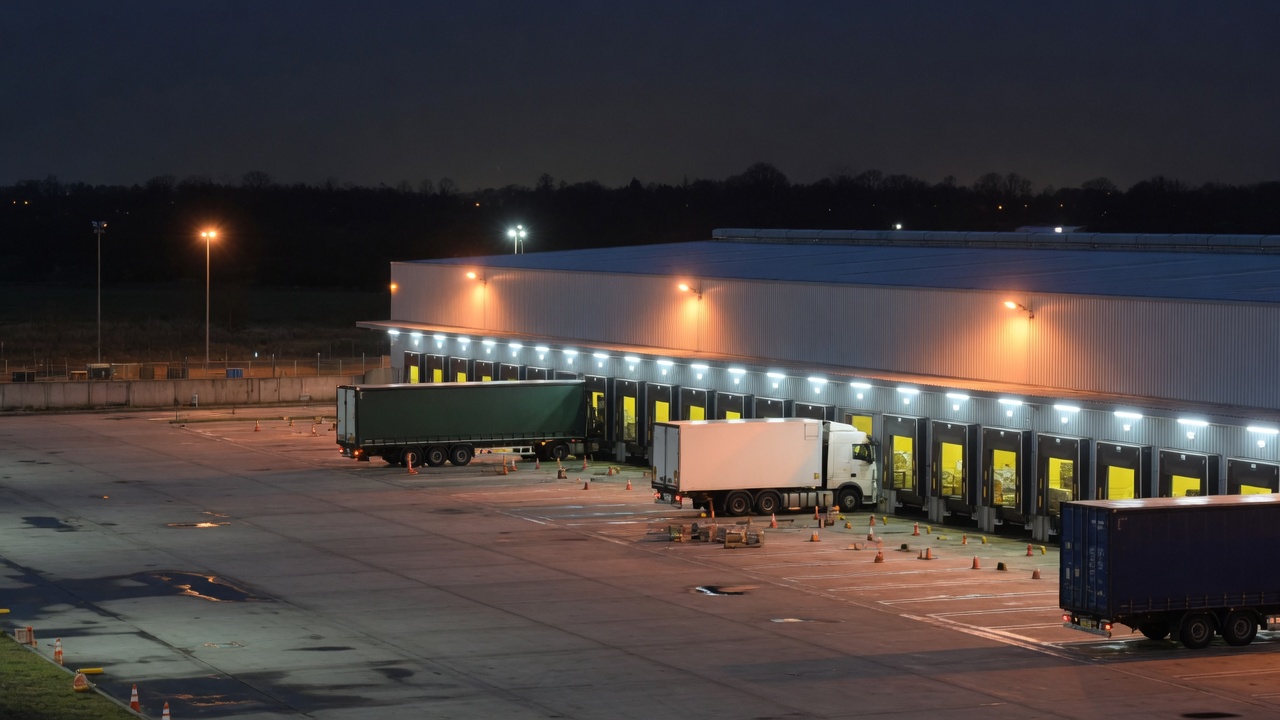
- Treat construction hours and port operations as acoustic planning, not only logistics.
- Protect remaining quiet landscapes as infrastructure.
- Notice, without self-reproach, how rarely your own week contains true quiet.
Demonstration authors are fictional. The phenomena discussed are real subjects of public scientific literature and reporting. Sources named in the article are documented; this is not a comprehensive literature review.